Floating islands Peru are built entirely from reeds. Meet the Uros families who still live on them today on the world’s highest navigable lake. Real life, real magic.
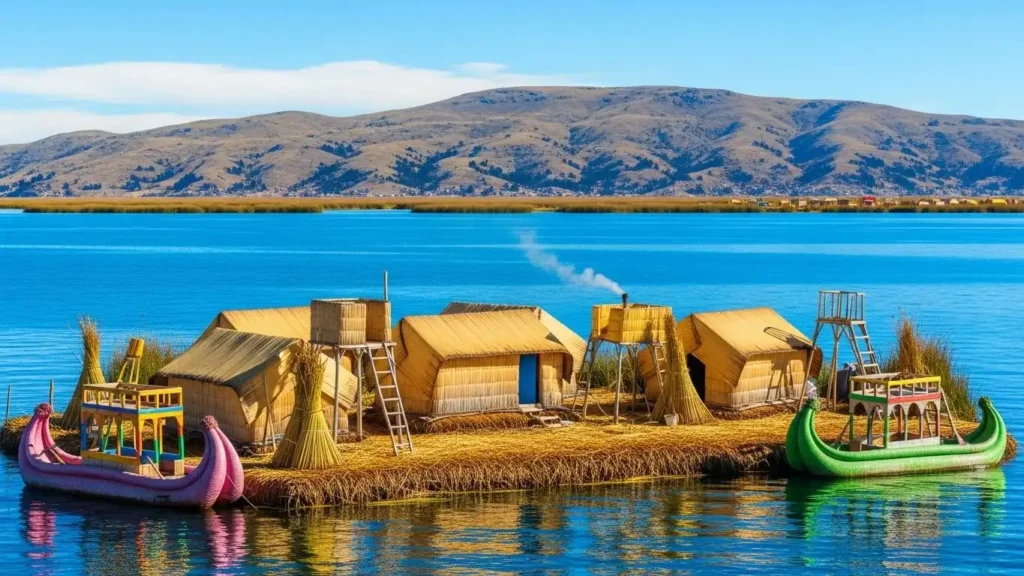
Close your eyes for a second. You step off a wooden boat onto ground that actually bounces. It smells like fresh hay, squeaks under your shoes, and every ripple from the lake rocks the entire island like a giant waterbed. You’re not dreaming. You’re standing on one of the floating islands Peru is famous for, hand-built and hand-maintained by the Uros people on Lake Titicaca. I did it a couple of years ago and I’m still not over it. The sky is impossibly blue, the altitude makes your heart race, and little kids run past laughing while their grandmas weave reeds faster than I can tie my shoes. If you want a place that feels like it floated straight out of a storybook, the floating islands Peru delivers every single time.

Why the Uros Started Living on Floating Islands Peru Centuries Ago
The Uros didn’t choose the lake life for fun. Long before the Incas showed up, the Uros were already here, fishing and weaving. When the Inca Empire started expanding, the Uros needed an escape plan. Land was easy to conquer. Water? Not so much. So they turned totora reeds—the tall, thick plants that grow everywhere around the lake—into floating escape pods. They could cut the ropes and drift away if soldiers came. Simple. Brilliant. It worked.
Today about 120 floating islands Peru-side still bob on Titicaca, home to roughly 1,200 Uros. Some families have lived this way for generations; others moved back to the water to keep the tradition alive. Either way, every island is 100 % man-made, 100 % reed-powered, and 100 % mind-blowing.
How You Actually Build a Floating Island in Peru (and Keep It Afloat)
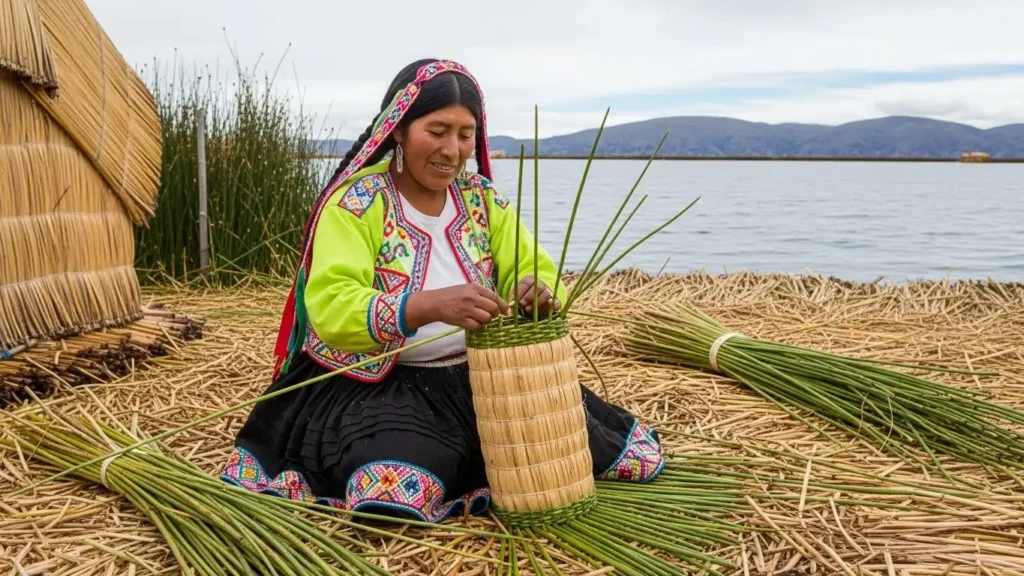
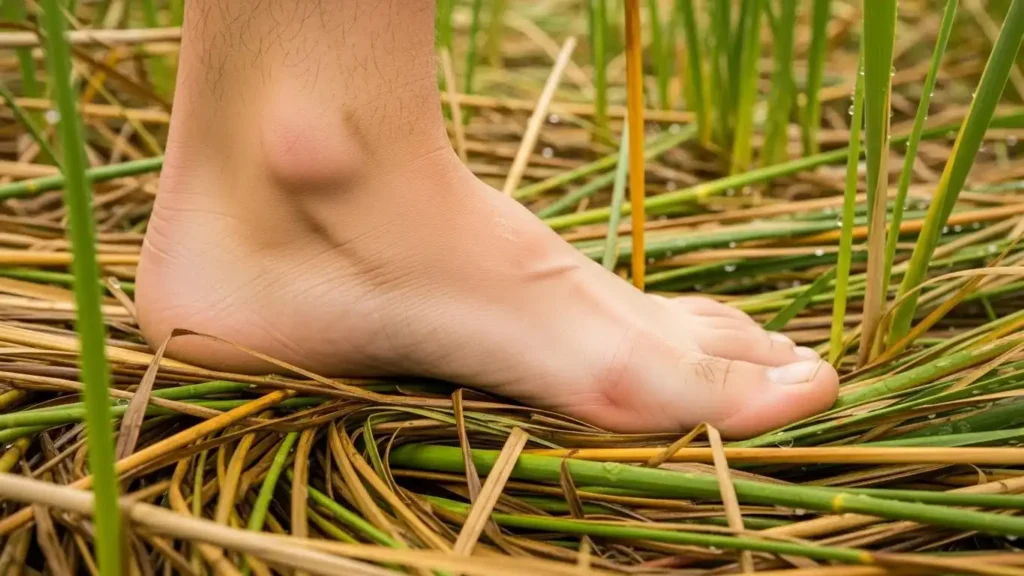
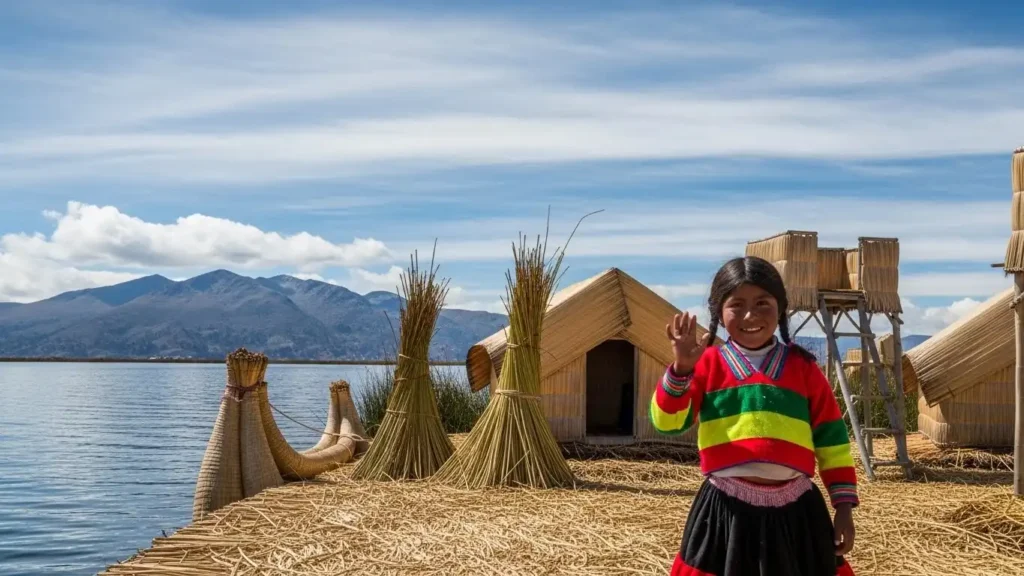
It’s not a weekend project. First, the Uros cut huge blocks of totora roots from the shallow parts of the lake. Those roots float like natural Styrofoam. They lash the blocks together with rope, then pile on layer after layer of dried reeds—sometimes three meters thick in the center so the island doesn’t sink when people walk around. Houses, kitchens, watchtowers, even little reed churches go on top. Everything smells like sweet grass and campfire.
The catch? Reeds rot from the bottom up. So every couple of weeks the families add a fresh layer on top. Miss a month and your living room starts getting soggy. Do it right and the island can last 25–30 years.
A Normal Day on the Floating Islands Peru (Yes, People Really Live Like This)
Morning starts early. Women fire up tiny reed stoves for quinoa porridge and coca tea. Men push off in their dragon-shaped reed boats to fish for trout or tiny silvery karachi. Kids feed the ducks, chase each other, and sometimes fall in the water (they all learn to swim before they walk). School is a one-room reed building with a Peruvian flag flapping outside. Lunch is fresh fish grilled over a la parrilla, maybe some potatoes, maybe guinea pig if it’s a special day.
Afternoons are for weaving—mats, baskets, miniature boats for tourists, giant sails for the bigger reed boats. Evenings are quiet: solar lights flicker on, someone strums a charango, and the whole families sit on the edge dangling their feet in the freezing water, watching the stars come out one by one. No traffic noise. No Wi-Fi (usually). Just lake sounds and laughter.
It’s hard work, sure. Storms can tear islands apart. Altitude makes everything tougher. But there’s a peace you don’t find on solid ground.
The Reed Boats That Look Like They Belong in a Museum (But Still Work Perfectly)
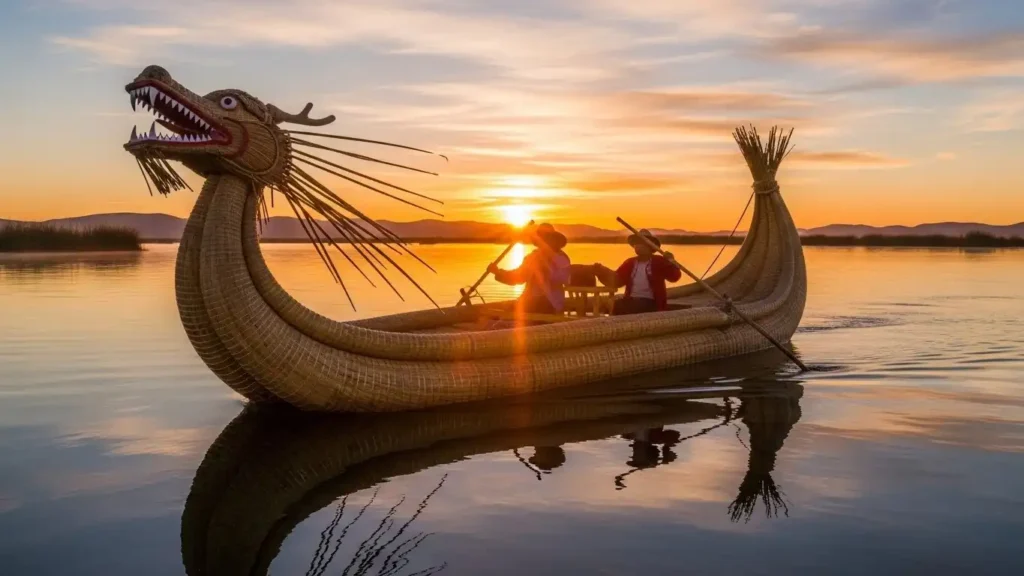
You can’t talk about the floating islands Peru without mentioning the boats. The classic ones—called caballitos de totora—curve up at both ends like Viking ships made of grass. A skilled Uros can paddle one standing up, using a long bamboo pole. They’re silent, fast, and completely biodegradable. Bigger islands have massive double-deck reed boats that carry 20 people and look like floating cathedrals.
I got to ride one at sunset. The boat flexed under my weight like a living animal, breathing creature. Ten minutes in I forgot I was on water and just stared at the Andes turning pink across the lake. Worth every sore muscle the next day.
Tourism on the Floating Islands Peru: The Good, the Tricky, and How to Do It Right
Tourism keeps the islands alive. Most families earn more from selling handicrafts and boat rides than from fishing these days. A half-day tour from Puno costs $10–20, a homestay with meals runs around $50–60. That money buys new reeds, school supplies, solar panels.
But it’s a balancing act. Too many boats in one day and the islands feel like a theme park. Too few and families can’t afford maintenance. The best visits happen when you go with local guides, stay overnight on a quieter island, and actually talk to people instead of just snapping selfies.
My rule: if a family invites you for tea, say yes. If they offer to teach you to weave a tiny reed bird, drop everything and learn. Those are the moments you’ll remember forever.
Why the Floating Islands Peru Still Feel Like Magic (Even After All These Years)
There’s something about standing on ground that moves with the water that rewires your brain. You realize how little humans can outsmart empires, outlast storms, and turn grass into homes. In a world obsessed with concrete and steel, the Uros remind us that sometimes the softest materials make the strongest foundations.
The islands aren’t frozen in time—they have phones, outboard motors, and kids who love reggaeton—but the heart of the place is the same as it was centuries ago. Family. Reeds. Lake. Repeat.
Final Thought From Someone Who Still Dreams About Reeds
I came home with a tiny reed boat on my desk and a permanent bounce in my step. Every time life feels too heavy, I remember the Uros: when the ground disappears, you can always build new ground. One reed at a time.
If Peru is on your list, move the floating islands Peru to the very top. Bring sunscreen, an open heart, and zero expectations. The lake will do the rest.
Safe travels, and may your own life feel a little lighter when you get back.


Nalin Ketekumbura is a passionate storyteller who uncovers quirky, timeless stories on BoardMixture LLC. Blending viral trends with evergreen curiosities, he crafts content that resonates and invites readers to share. Always curious, Nalin loves digging into the odd and unexpected corners of everyday life, turning them into captivating tales that keep people coming back for more.