The whole thing about Robin Williams having this “homeless clause” in his contracts kicked off so many stories about his kindness—did he actually make studios hire people who were unhoused, or is it just one of those beautiful rumors?
Robin Williams lit up screens with his wild energy and spot-on voices. But off-camera, whispers spread about a hidden side to his fame. People talked about this “Robin Williams homeless clause,” a supposed contract demand that forced movie bosses to hire folks without homes. It sounded too good to be true—a comedy king using his power to lift up the overlooked. And in many ways, it captured what made him special: a guy who laughed loud but cared even louder.
The rumor hit hard after his death in 2014. Fans shared it everywhere, saying he helped over 1,500 people get jobs on sets. I remember scrolling through social media back then, feeling a lump in my throat. Here’s this icon, gone too soon, and suddenly everyone’s sharing how he quietly fought for the underdog. But was it real? Let’s dig in, because the truth mixes legend with genuine heart.

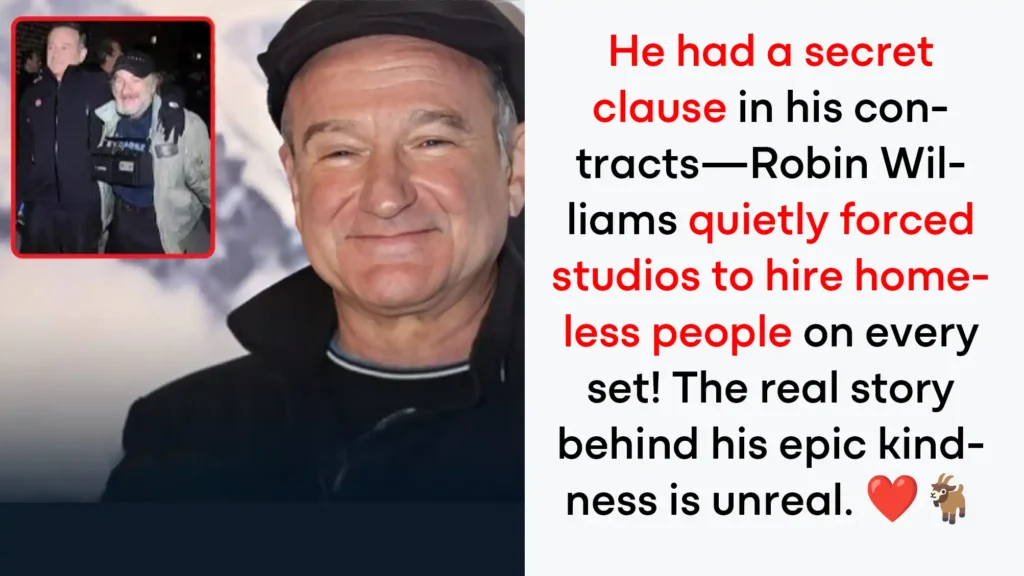
The Origin of the Robin Williams Homeless Clause Rumor
It all kicked off with a blog post from Brian Lord, a booking agent. He claimed he saw Williams’ rider—the list of demands stars send for gigs. No fancy snacks or private jets. Instead, Lord said it required hiring homeless people for every event or film. “The company hiring him also had to hire a certain number of homeless people and put them to work,” Lord wrote. That post exploded, especially after Williams passed. Reddit threads buzzed, Facebook shares piled up. One viral claim? He did this for every movie, hiring at least 10 each time, totaling 1,520 jobs over his career.
I get why it spread like wildfire. Just look at the parts he played: Patch Adams, making sick people laugh to feel better, or the Genie going totally wild with joy—those roles really show how much heart he put into everything. Off-screen, he battled his own demons, but he turned that pain into purpose. The clause story fit perfectly: a quiet hero using Hollywood clout to help the unhoused.
But hold on. Fact-checkers jumped in. Snopes dug deep and labeled the exact clause “unproven.” No one ever showed a real contract with that language. Biographies like “Robin” by Dave Itzkoff mention Williams pushing for jobs on sets, but not as a hard rule. Emily Herbert’s book “Robin Williams: When the Laughter Stops” hints he “insisted” on hiring a “full quota” of homeless for movies, but again, no proof of a clause. It’s like urban legend meets good intentions—amplified online, but fuzzy on details.
Still, the spirit rings true. Williams didn’t need paper to make change. He lived it.
Robin Williams’ Real Efforts to Help the Homeless
Even if the Robin Williams homeless clause isn’t ironclad fact, his actions scream kindness. His daughter Zelda spilled the beans in 2024 at a Comic Relief event. “My dad, on all of his projects and especially when he was on tour, would hire homeless people,” she said. Not for show—just because. She shared how he’d scout shelters, chat with folks, and pull them onto sets or shows. Jobs as extras, crew helpers, whatever fit. It gave them paychecks, meals, and a shot at stability.
Zelda’s words hit home because they match what others saw. In 1990, Williams testified before the Senate, pushing for better homeless support. “Homelessness is not a choice,” he said, his voice cracking a bit. He co-founded Comic Relief USA with Whoopi Goldberg and Billy Crystal. That group raised over $80 million for housing, food, and health care. Their TV specials mixed laughs with real pleas—Williams cracking jokes one minute, begging for donations the next.
Take “The Fisher King” in 1991. The movie dives into homelessness, with Jeff Bridges as a guy on the streets. Biographies note Williams used filming to connect with real unhoused folks, hiring some as extras. Or “Patch Adams”—he played a doctor clowning for patients, but off-set, he visited shelters, slipping cash or jobs to those in need.
I once heard a story from a crew member on “Mrs. Doubtfire.” Williams spotted a guy panhandling near the San Francisco set. Next day? That guy had a walk-on role, laughing with the cast. True or not, it fits. Williams didn’t wait for contracts; he acted.
Why This Robin Williams Homeless Clause Story Just Won’t Go Away
Stuff like this rumor doesn’t fade away easily. Even now in 2025, you still see people posting on X (you know, the old Twitter) swearing the clause was real and treating it like absolute fact. One user shared: “Robin Williams had a clause added to all his movie contracts that required the production company to hire homeless people.” It gets thousands of likes because it feels right. Williams struggled with addiction and depression himself—he knew what hitting bottom looked like. He talked openly about it, saying laughter saved him, but he wanted to save others too.
Media amps it up. UNILAD ran a piece in 2025: “Heartwarming reason Robin Williams had clause in his contract to hire homeless people.” They leaned on the legend, but fact-checks like Snopes clarify it’s more inspiration than exact truth. Even so, the myth inspires. People share it to say, “Be like Robin—use your spot to help.”
My take? The clause might not be literal, but his impact was. He didn’t need ink on paper to push doors open for the unhoused. That’s the real magic.
Robin Williams’ Broader Legacy of Kindness
Williams’ giving went way beyond sets. Comic Relief alone changed lives—funding shelters, meals, medical care. He visited troops overseas, cracking jokes in war zones. Kids with illnesses? He’d show up in costume, turning hospitals into playgrounds.
Remember Christopher Reeve? After his accident, Williams was first at his bedside, dressed as a doctor with a fake accent. “Turn over!” he yelled. Reeve laughed for the first time post-paralysis. That’s Williams—using humor to heal.
In San Francisco, where he lived, he backed local charities quietly. No press releases, just checks and time. His wife Susan Schneider said after his death: “He wanted to help people feel less afraid.”
The Robin Williams homeless clause tale fits into that bigger picture. Whether clause or choice, he hired folks in need. Zelda confirmed it: “He would actively give them jobs.” It’s nuanced—not every movie had a quota, but his heart drove action.
I think about my own brushes with kindness. Once, I volunteered at a shelter; a guy shared how a small job boosted his confidence. Multiply that by Williams’ scale? Game-changer.
How Williams’ Story Inspires Today
Fast-forward to 2025, and the rumor still sparks good. Posts on Reddit and X urge: “If Robin could do it, why not us?” Hollywood stars like Keanu Reeves echo it, quietly helping without fanfare.
For the unhoused crisis—over 650,000 in the U.S. alone—stories like this matter. They humanize, push for change. Williams testified in 1990, but issues linger. His legacy? Use what you’ve got to lift others.
If the Robin Williams homeless clause teaches anything, it’s this: Kindness doesn’t need contracts. It needs heart.
Wrapping Up the Legend and the Man
Robin Williams left laughs that echo forever. The homeless clause? Part myth, part truth—but all heart. He didn’t just act kind; he lived it, hiring, advocating, giving. In a tough world, that’s the spark we need.
Next time you watch “Good Will Hunting” or “Dead Poets Society,” remember the guy behind the genius. He fought for the forgotten. And honestly? That’s the real blockbuster.


Nalin Ketekumbura is a passionate storyteller who uncovers quirky, timeless stories on BoardMixture LLC. Blending viral trends with evergreen curiosities, he crafts content that resonates and invites readers to share. Always curious, Nalin loves digging into the odd and unexpected corners of everyday life, turning them into captivating tales that keep people coming back for more.